
Insikter & nyheter från Revea

The Swedish Pension System – How It Works, Its Advantages and Disadvantages

Planning to retire in Sweden or already living here and wondering about your pension rights? The Swedish pension system is considered one of the most transparent in Europe, but its rules can be confusing for foreigners. In this article, we explain how pensions work in Sweden, how many years you need to qualify, and the key benefits and limitations of the system.
Martin Krus
2025-09-22
5 min read

Are you living in Sweden and planning to retire here? This article explains how the Swedish pension system works, how many years you need to work to receive a pension, and what every expat or future pensioner in Sweden should know.

What Is the Retirement Age in Sweden?

Sweden has no official retirement age, which means pensions are not paid out automatically. If you wish to retire, you must apply to the Swedish Pensions Agency (Pensionsmyndigheten).

As of 2023, you can apply from the age of 63 (previously 61). Starting in 2026, the lower pension age will gradually increase in line with life expectancy.

You can continue working beyond retirement age, and the later you retire, the higher your pension benefit. You can choose to receive the full pension or partial payments while continuing to work.

How Many Years Do You Need to Work to Qualify?

To receive the guaranteed pension, you must:

  • Be at least 66 years old (previously 65)
  • Have lived in Sweden for at least 3 years
  • If you’ve lived or worked in the EU, EEA, or Switzerland, your years can be combined—but at least 1 year must be in Sweden

To qualify for the full guaranteed pension, you must have lived in Sweden for at least 40 years, from age 16 until retirement age. If you’ve lived in Sweden for fewer years, the pension will be proportionally lower.

People born in 1937 or earlier may still receive the guaranteed pension as compensation for changes made in the pension system in 2003.

What Is the Structure of the Swedish Pension System?

The Swedish pension system consists of three pillars:

  • Public pension (allmän pension) – provided by the state
  • Occupational pension (tjänstepension) – provided by the employer
  • Private pension savings (privat pension) – personal savings in a private pension fund

Public Pension (Allmän Pension)

The public pension is paid out by Pensionsmyndigheten and includes:

Income Pension (Inkomstpension)

This is based on your income throughout your working life. Each year, 16% of your income is allocated to this pension. Income includes wages, parental allowance, unemployment benefits, sickness benefits, and self-employment income. Women receive pension contributions from the state for 4 years after giving birth.

Premium Pension (Premiepension)

Each year, 2.5% of your income goes into a pension fund of your choice, or into the state fund AP7 Såfa. This is similar to private investment accounts.

Guaranteed Pension (Garantipension)

This is for those aged 66 or older, even if they have little or no income history. You must have lived in Sweden for at least 3 years to qualify. Full benefit is available after 40 years of residence.

  • Maximum guaranteed pension:
    • 8,597 SEK for single individuals
    • 7,861 SEK for married individuals

Pension Supplement (Pensionstillägg)

This is part of the guaranteed pension and depends on your income pension and number of working years. It is automatically included when applying for your public pension.

  • Available from age 66
  • Maximum amount: 600 SEK/month (gross)

Additional Benefits for Pensioners

If your pension is low, you may qualify for:

Housing Supplement

Available for renters, homeowners, co-ops, care homes, etc. Amount depends on income, assets, housing costs, and family situation. Apply from age 66, once you receive your full public or foreign pension.

Elderly Support Allowance

For people who do not receive a full pension or receive no pension at all. Helps cover basic living and housing costs.

Survivor’s Pension

If a close relative dies (spouse, parent, cohabiting partner), the survivor may receive benefits such as:

  • Orphan’s pension
  • Adjustment pension
  • Widow’s pension

No need to apply—Pensionsmyndigheten contacts eligible individuals after receiving the death notification.

Occupational Pension (Tjänstepension)

Most people in Sweden receive an occupational pension in addition to the public pension. If you’ve had multiple employers, you may receive payments from several pension providers.

Not all employers offer occupational pension—you must check your contract.

There are four main collective agreements for tjänstepension in Sweden:

  1. Municipal and regional employees
  2. State government employees
  3. White-collar private sector workers
  4. Blue-collar private sector workers

It may also include:

  • Health insurance coverage (beyond Försäkringskassan)
  • Life insurance benefits for surviving family members

Pension companies typically contact you around age 65. You can also request early withdrawal. You can choose to receive benefits for 5, 10, 15, 20 years or lifelong.

Private Pension Savings

If you are self-employed or not covered by occupational pensions, you can choose to save privately.

Saving 4.5–6% of your income during your working years can match the average tjänstepension benefit.

Popular options include:

  • Investment Savings Accounts (ISK)
  • Capital insurance (kapitalförsäkring)

Pros and Cons of the Swedish Pension System

Disadvantages

  • Full public pension available only from age 66
  • Retirement age will increase from 2026 onward
  • Full guaranteed pension only available after 40 years of residence
  • Foreign pensions may reduce benefits like housing supplement and basic pension

Advantages

  • Guaranteed pension for those aged 66+ with low or no income
  • Mandatory occupational pension programs
  • AP7 Såfa fund has historically high returns
  • Partial pension eligibility after just 3 years of residence
  • Additional benefits include housing supplements, elderly allowances, survivor’s pensions
  • Mothers receive 4 years of pension contributions after childbirth
  • The state contributes for:
    • Parental leave
    • University students with financial aid
    • Military trainees
    • Unemployed individuals receiving benefits

Need Help with Your Pension in Sweden?

Have questions about Pensionsmyndigheten, pension rights, or how to apply?

Contact our accounting office — we’ll help you navigate every part of the Swedish pension system.

Contact ReveA

Do you need help with ?

Revea helps a lot of business owners with . Do you also need some help? Fill out the form and we'll get back to you shortly.

Please fill in your contact details below and we will get back to you quickly to schedule an appointment.
Oh, thank you. We have received your message and will get back to you as soon as we have the opportunity.
Oops! Something went wrong while submitting the form.
2026-07-10
read time

Byggnads Inspection – How to Prepare Your Company for an Inspector Visit

Running a construction company in Sweden? A Byggnads inspection verifies wages and insurance policies. Find out how the union’s Polish-language branch operates and how to avoid penalties.

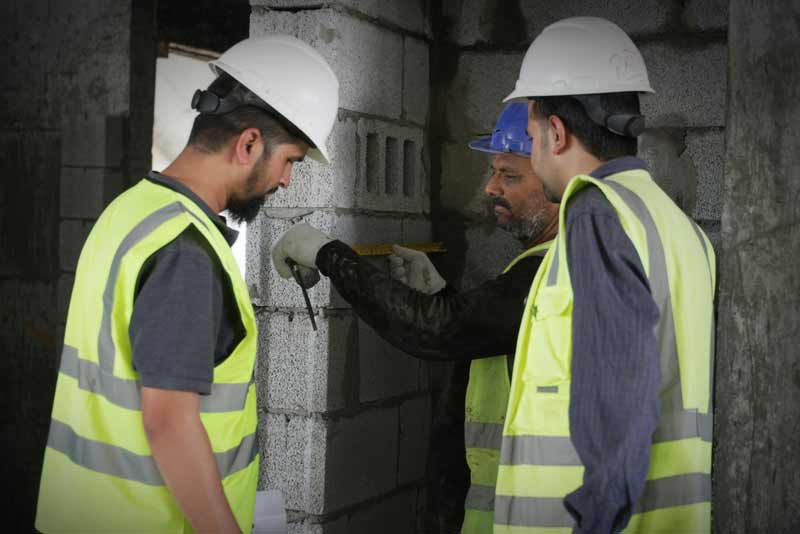
For Polish companies carrying out contracts in Scandinavia, a Byggnads inspection (by the Swedish construction workers’ union) is one of the biggest operational challenges. In 2026, these are no longer just routine visits. We are seeing a clear shift in approach from the Swedish trade union organisation Byggnads, which represents thousands of construction workers. The union has become more proactive, reaching out directly to workers from Poland.

The union’s new strategy – the “Polish Club”

A major development in recent years was the creation of a structure dedicated to Polish workers. Paweł Zajdel took the lead on this initiative in the construction sector. As chairman of the Polish club Byggnads Stockholm Gotlandia, he has brought about a situation where the language barrier no longer protects unscrupulous employers.

This is the first ever Polish-language branch of the Swedish trade union Byggnads. Its goal is to fight discrimination. Union members frequently share stories of workers who, upon hearing “jaevla polack” (bloody Pole), were afraid to report irregularities. Today, thanks to education and awareness, construction workers are speaking up more and more.

What does an inspection cover?

Inspectors verify whether workers employed by subcontractors – even those working on the same site – receive worse rates than their Swedish colleagues. The table below outlines the key areas checked during an audit:

Inspection area What does Byggnads look for? Risk for the employer
Wages Does the pay rate match the worker's classification group (Yrkesbevis)? Obligation to back-pay wages up to 2–3 years retroactively.
Insurance Has the FORA insurance package been paid? Polish workers are increasingly vocal about missing insurance policies. High contractual penalties and being added to a blacklist.
Working hours Compliance with the 40-hour working week and overtime supplements. Site blockade.

Why do inspections happen?

The trigger often comes from the workers themselves. Statistics show that people seek help from unions only when they have a problem – for example, when their final pay has not been received. At that point, a Byggnads inspection reviews the entire employment history of the company.

The union fights not only for wages, but also for working conditions, a shorter working week and better social benefits. Securing minimum pay increases is cited as the main objective in collective agreement negotiations.

Summary

Legal work in Sweden requires transparency. As an employer, you need to remember that fighting a trade union is not the way forward – cooperating with it on clear terms is. The solution is professional HR management.

Are you worried whether your documentation would stand up to scrutiny from union representatives? Contact Revea’s accounting office. We will review your contracts and payroll calculations before an inspector shows up on site.

2026-07-07
read time

Mertid eller övertid – vad gäller för företag utan kollektivavtal?

Att skilja mellan mertid och övertid är viktigt för en korrekt lönehantering. För företag utan kollektivavtal är det framför allt arbetstidslagen och anställningsavtalet som avgör vilka regler som gäller. Här går vi igenom skillnaderna och vad du som arbetsgivare behöver tänka på.

I många företag uppstår situationer där anställda arbetar mer än sin ordinarie arbetstid. Då väcks ofta frågor om vad som räknas som mertid respektive övertid, och vilken ersättning som ska betalas.

För företag utan kollektivavtal kan reglerna upplevas som otydliga. Vad säger egentligen lagen, och vad behöver arbetsgivare tänka på för att säkerställa en korrekt lönehantering?

I den här artikeln går vi igenom skillnaden mellan mertid och övertid samt vad som gäller för företag som saknar kollektivavtal.

Vad är mertid?

Mertid gäller normalt för deltidsanställda.

Det innebär att en deltidsanställd arbetar fler timmar än vad som anges i anställningsavtalet, men fortfarande inte överstiger den ordinarie arbetstiden för en heltidsanställd.

Exempel:
En medarbetare arbetar 50 procent, motsvarande 20 timmar per vecka. Om personen arbetar 28 timmar en vecka räknas de extra åtta timmarna som mertid.

Vad är övertid?

Övertid uppstår när en anställd arbetar utöver den ordinarie arbetstiden för en heltidsanställning.

Det kan exempelvis bli aktuellt vid hög arbetsbelastning, tillfälliga arbetstoppar eller när verksamheten kräver extra insatser under en begränsad period.

Övertid ska som huvudregel vara beordrad eller godkänd av arbetsgivaren.

Vad gäller om företaget saknar kollektivavtal?

Om företaget inte omfattas av kollektivavtal är det framför allt arbetstidslagen och anställningsavtalet som styr vilka regler som gäller.

Det innebär bland annat att:

  • arbetstiden omfattas av lagstadgade begränsningar,
  • övertid endast får tas ut inom de ramar som lagen medger,
  • villkor för övertidsersättning bör regleras i anställningsavtalet eller i företagets interna riktlinjer.

Eftersom det saknas kollektivavtal som reglerar ersättningen är det viktigt att arbetsgivaren tydligt informerar om vilka villkor som gäller.

Hur kan övertid ersättas?

I företag utan kollektivavtal finns större frihet att komma överens om hur övertid ska kompenseras.

Vanliga alternativ är:

  • ekonomisk övertidsersättning,
  • kompensationsledighet,
  • eller en kombination av båda.

Oavsett vilken lösning som väljs bör reglerna dokumenteras och kommuniceras tydligt till de anställda.

Vad bör arbetsgivare tänka på?

För att undvika missförstånd och säkerställa en korrekt lönehantering rekommenderar vi att företaget:

  • tydligt anger ordinarie arbetstid i anställningsavtalen,
  • har en skriftlig policy för mertid och övertid,
  • dokumenterar arbetad tid på ett korrekt sätt,
  • säkerställer att lönehanteringen hanterar ersättningarna enligt företagets regler och gällande lagstiftning.

Tydliga rutiner minskar risken för tvister och skapar en tryggare arbetsmiljö för både arbetsgivare och medarbetare.

Behöver ni hjälp med lönehanteringen?

Regler kring arbetstid, mertid och övertid kan vara komplicerade – särskilt för företag utan kollektivavtal. En korrekt hantering är viktig både för att följa lagstiftningen och för att skapa tydliga villkor för de anställda.

Har du frågor kring lönehantering eller arbetstidsfrågor i ditt företag? Kontakta oss på Revea – vi hjälper dig gärna med både rådgivning och löpande löneadministration.

2026-06-23
read time

Vad kostar en redovisningsbyrå? Så fungerar prissättning inom redovisning

Vad kostar en redovisningsbyrå? Här går vi igenom vanliga prismodeller, vad som påverkar priset och hur Revea arbetar med tydliga och transparenta månadspriser.

När företag börjar jämföra redovisningsbyråer är en av de vanligaste frågorna:

Vad kostar egentligen redovisning?

Svaret är sällan helt enkelt. Kostnaden kan variera beroende på företagets storlek, verksamhetens komplexitet och vilka tjänster som ingår i uppdraget.

För vissa företag handlar det främst om löpande bokföring, medan andra behöver stöd med lönehantering, rapportering, bokslut eller ekonomisk rådgivning. Därför kan både upplägg och pris skilja sig åt mellan olika redovisningsbyråer.

I den här artikeln går vi igenom hur prissättning hos redovisningsbyråer vanligtvis fungerar, vilka faktorer som påverkar kostnaden och hur vi på Revea arbetar med prissättning.

Vanliga prismodeller hos redovisningsbyråer

Det finns flera olika sätt för redovisningsbyråer att ta betalt för sina tjänster. Vilken modell som passar bäst beror ofta på företagets behov och hur förutsägbart uppdragets omfattning är.

Timdebitering

Timdebitering innebär att företaget betalar för den tid som redovisningsbyrån lägger ner varje månad.

Den här modellen används ofta när arbetsmängden varierar mycket eller när uppdraget innehåller många tillfälliga insatser. Fördelen är att företaget endast betalar för faktiskt utfört arbete. Nackdelen är att kostnaden kan vara svårare att förutse från månad till månad.

Fast månadspris

Ett fast månadspris baseras på uppdragets omfattning och förväntade arbetsinsats.

Många företag uppskattar denna modell eftersom den ger bättre budgetkontroll och tydligare kostnadsbild. Ofta omfattar priset löpande bokföring och andra överenskomna tjänster som återkommer regelbundet.

Hybridmodeller

Vissa redovisningsbyråer arbetar med en kombination av fast pris och tilläggstjänster.

Det kan exempelvis innebära att den löpande redovisningen ingår i ett fast månadspris medan särskilda projekt, rådgivning eller mer omfattande utredningar debiteras separat.

Vad påverkar kostnaden för redovisning?

När företag söker efter information om pris redovisningsbyrå eller redovisning företag kostnad är det viktigt att förstå att flera faktorer påverkar den slutliga kostnaden.

Några av de vanligaste är:

  • Antal verifikationer per månad
  • Antal anställda och omfattningen av lönehantering
  • Internationell handel och momsfrågor
  • Behov av rapportering och ekonomisk rådgivning
  • Företagets systemmiljö och integrationer
  • Hur digitala och automatiserade processerna är

Ju mer strukturerade och digitaliserade arbetsflöden ett företag har, desto effektivare kan redovisningsarbetet utföras. Det kan i många fall bidra till lägre administration och ett mer kostnadseffektivt samarbete.

Hur vi arbetar med prissättning på Revea

På Revea arbetar vi med tydliga och transparenta månadspriser.

Vår målsättning är att kunderna ska veta vad de betalar för och kunna planera sina kostnader utan oväntade överraskningar.

Prissättningen baseras främst på:

  • Antal verifikationer
  • Antal anställda (om lönehantering ingår)
  • Omfattningen av rapportering och rådgivning
  • Eventuella särskilda behov kopplade till verksamheten

Genom att utgå från företagets faktiska behov kan vi skapa en lösning som är anpassad efter verksamheten samtidigt som kostnaderna blir förutsägbara över tid.

Flexibla uppdrag – hela eller delar av ekonomifunktionen

Alla företag har olika behov när det gäller ekonomihantering.

Vissa väljer att outsourca hela ekonomifunktionen medan andra endast behöver stöd inom specifika områden.

Det kan till exempel handla om:

  • Löpande bokföring
  • Lönehantering
  • Bokslut och deklaration
  • Ekonomisk rapportering
  • Ekonomisk rådgivning

Det är också vanligt att företag har en intern ekonomifunktion och samarbetar med en redovisningsbyrå kring vissa delar av arbetet, exempelvis löner, bokslut eller avancerade redovisningsfrågor.

Ett flexibelt upplägg gör det möjligt att anpassa stödet efter företagets utveckling och behov över tid.

Samarbete i samma system

En viktig del av modern redovisning är att både företaget och redovisningsbyrån arbetar i samma ekonomisystem.

På Revea arbetar vi i digitala lösningar där kunden alltid har full tillgång till sin ekonomi. Det innebär att företaget kan följa bokföring, fakturor och rapporter i realtid.

Många företag väljer också att själva hantera vissa delar av ekonomiarbetet, till exempel att:

  • Skapa och skicka kundfakturor
  • Godkänna leverantörsfakturor
  • Registrera kvitton och utlägg
  • Följa upp rapporter och nyckeltal

Samtidigt kan redovisningsbyrån ta ansvar för mer komplexa delar såsom bokföring, avstämningar, lönehantering, rapportering och bokslut.

Detta arbetssätt skapar en ekonomifunktion som är både effektiv och transparent samtidigt som företaget behåller full kontroll över sin ekonomi.

Exempel

Ett företag med cirka 20 anställda och ett par hundra verifikationer per månad kan ofta arbeta med ett fast månadspris där både bokföring och lönehantering ingår.

Den exakta kostnaden beror dock alltid på företagets struktur, system, processer och vilka tjänster som efterfrågas.

Därför är det svårt att ge ett generellt svar på frågan vad kostar en redovisningsbyrå utan att först förstå företagets behov och förutsättningar.

Vad företag bör tänka på när de jämför redovisningsbyråer

När företag jämför olika alternativ är priset naturligtvis en viktig faktor. Men det är sällan den enda aspekten som avgör värdet av samarbetet.

Det kan även vara klokt att titta på:

  • Transparens i prissättningen
  • Erfarenhet och kompetens
  • Digitala system och integrationer
  • Tillgänglighet och rådgivning
  • Möjligheten att växa tillsammans över tid

En bra redovisningsbyrå fungerar inte bara som en leverantör utan som en långsiktig partner som bidrar till bättre kontroll, effektivare processer och bättre beslutsunderlag.

Sammanfattning

Kostnaden för redovisning varierar beroende på företagets behov, arbetsprocesser och omfattningen av tjänsterna. Därför är det viktigt att inte bara jämföra prisnivåer utan också förstå vad som faktiskt ingår i erbjudandet.

Med tydliga processer, moderna system och transparent prissättning blir det enklare att skapa ett samarbete som ger långsiktigt värde för verksamheten.

Vill du veta vad redovisning skulle kosta för just ditt företag?

Kontakta oss på Revea så berättar vi gärna mer om hur vi arbetar och hur ett upplägg kan anpassas efter just era behov.

2026-06-16
read time

AGI Sweden – A Key Obligation When Posting Workers in 2026

Posting workers to Scandinavia? AGI Sweden is a monthly payroll reporting obligation to Skatteverket. Learn the SINK tax rules, deadlines and risks in 2026.

What is AGI and who does it apply to?

AGI Sweden (Arbetsgivardeklaration på individnivå) is a monthly employer declaration filed at the individual level. Instead of reporting a combined tax amount for your entire workforce, you itemise the salary, tax deduction and employer contributions for each employee separately.

In the context of posting workers, the obligation to file AGI arises when your company has registered as an employer in Sweden, when you employ workers subject to Swedish tax obligations (e.g. SINK tax), or when there is a so-called economic employer – a key concept for foreign companies.

The Economic Employer trap (Ekonomiskt arbetsgivare)

Just a few years ago, the 183-day rule allowed companies to avoid paying taxes in Sweden on short contracts. In 2026, the rules are significantly tighter. If your employees perform work for a Swedish entity that directly benefits from their services, Swedish tax authorities may treat that Swedish company as the actual employer – even if the formal employment contract is with your Polish company. The tax obligation then arises from the very first day of work.

SINK vs A-SINK vs Full taxation

  • SINK: flat 25% on gross salary, no deductions. Best for short assignments.
  • A-SINK: flat 15%, applies to artists and athletes only.
  • Full taxation: applies when workers have unlimited tax liability in Sweden. Full employer social contributions apply.

How to file AGI in Sweden

The process is entirely digital and requires a Swedish BankID or an authorisation for an accounting firm. The declaration must be filed by the 12th of the month following payment of wages. You must report exact salary amounts, benefit values (e.g. accommodation, meals), and the tax withheld. Corrections are allowed, but frequent amendments may trigger a tax audit.

Common mistakes by Polish companies

Missing coordination numbers

Without a Samordningsnummer for each worker, filing a correct AGI is very difficult. Skatteverket may reject the declaration or require complex manual procedures. Apply for coordination numbers early.

Failing to report benefits

Sweden strictly taxes non-monetary benefits. Accommodation provided to workers must be valued at market or standard Skatteverket rates. Failing to declare this results in surcharges and penalty interest.

Inconsistency with ID06

On larger construction sites, ID06 records actual worker attendance. Inspectors cross-check ID06 logs against AGI declarations. If a worker was on site for a full month but only appears in AGI for two weeks, expect an audit request.

Summary

AGI Sweden is proof to the Swedish authorities that your company operates lawfully. Errors can result in automatic late-filing fees (förseningsavgift), blocked ID06 cards for your workers, and payment problems with clients who bear joint liability for your taxes.

At Revea, we specialise in AGI procedures for companies posting workers to Sweden. Contact us to ensure full compliance with Swedish law in 2026.

2026-06-05
read time

Company in Sweden – Start-up and Running Costs in 2026

Planning a business in Scandinavia? Registering a company in Sweden (Aktiebolag) is a great opportunity for foreign entrepreneurs. Check costs, requirements and procedures with the tax authority.

The myth that Sweden is an expensive country for entrepreneurs often stems from a misunderstanding of its system. Yes, taxes are high – but the costs of running a company in Sweden are predictable, and bureaucracy is kept to a minimum. In 2026, thanks to the full digitalisation of dealings with authorities, many administrative fees (such as stamp duties or postal costs) are a thing of the past.

How much do you realistically need to invest to open a business across the Baltic? We break down the costs, analysing the different types of business activity available in Sweden.

1. Choosing a legal form and start-up capital

Your first expense depends on the structure you want to operate under. Swedish law offers several options, the most popular being the sole trader (Enskild firma) and the limited company (Aktiebolag).

Sole trader (Enskild firma)

This is the cheapest option to get started. Importantly, it requires no start-up capital. Registration with the Swedish Companies Registration Office (Bolagsverket) is often optional (costing around 1,000–1,500 SEK), and the registration itself with the tax authority is free of charge.

Limited company (Aktiebolag)

If you want to separate your personal assets from your business assets, you choose the limited company – Aktiebolag.

The share capital requirement in 2026 remains a minimum of 25,000 SEK. Importantly, this money is not lost. You can use it for current business expenses immediately after registration.

The registration fee is a one-off cost at Bolagsverket of approximately 1,900 SEK (when registering online).

2. Fixed costs – taxes and social contributions

Once you register, you enter into a relationship with Skatteverket. Regardless of your legal structure, you need to account for monthly obligations.

F-skatt (income tax and contributions) – the business owner pays their own contributions. The total burden (municipal tax + social insurance) is typically around 40–50% of net income.

VAT – The standard VAT rate in Sweden is 25%. There are, however, reduced rates: 12% (e.g. food, hotels) and 6% (books, passenger transport). You file monthly, quarterly or annually – depending on your turnover.

Social insurance (Försäkringskassan)

As a business owner, you are responsible for your own social security. The company owner registers with the Swedish Social Insurance Agency Försäkringskassan to become entitled to sickness and parental benefits. Contributions for these benefits are already included in the so-called Egenavgifter (part of F-skatt), which amount to approximately 28.97% of income.

3. Foreign company in Sweden – specific costs

Many foreign entrepreneurs do not set up a new company but instead register a branch or operate as a foreign entity (utländsk företagare).

In that case, you must submit a completed application for foreign entrepreneurs (form SKV 4632). The procedure itself is free, but gathering the required documents comes at a cost:

  • A certificate of no arrears with ZUS (Polish social insurance) – required when applying for F-skatt.
  • Sworn translations of the company’s registration documents (KRS extract).

For companies from the European Union and the European Economic Area, the process is simplified, but still requires correspondence with the authority. The main contact address for foreign companies is: Swedish Tax Agency, Skatteverket Utlandsskattekontoret, SE-205 31 Malmö.

Cost overview

To help you make an informed decision, we have prepared a simple summary of estimated costs (figures for 2026):

Cost type Sole trader (Enskild firma) Limited company (Aktiebolag) Foreign company branch
Start-up capital 0 SEK min. 25,000 SEK 0 SEK
Official registration 0 – 1,500 SEK approx. 1,900 SEK approx. 2,000 SEK (branch)
Accounting (monthly) from 1,500 SEK from 3,000 SEK from 2,500 SEK
Virtual office address from 500 SEK from 500 SEK from 500 SEK
Annual report Simplified (part of personal tax return) Full financial statements Depending on turnover

Costs you need to be aware of

When planning your budget, do not forget about operational expenses that are specific to the Swedish market:

  • ID06 cards – if you work in construction, every worker must hold a card (cost of a few hundred kronor + an annual company fee).
  • Bank account – opening an account for a company with foreign capital can be difficult and costly in Sweden. Banks require a personal visit and a range of AML (Anti-Money Laundering) documents.
  • Correspondence address – authorities send correspondence by post. If you do not have an office, you will need to rent a mailbox or virtual office service, which generates a fixed monthly cost. Remember to provide proof of a branch address in Malmö or another delivery address in Sweden if the authority requests it.

Summary

The answer to “how much does a company in Sweden cost?” depends on the scale of your activity. For a self-employed person (consultant, developer), the entry costs are nearly zero. For a construction company, there are investments in certificates and administration. The most expensive things in Sweden, however, are mistakes. Failing to file a declaration on time, miscalculating VAT, or failing to register in the correct register results in fines running into thousands of kronor.

At Revea, we make sure your costs of running a company in Sweden are limited to the essentials. We assist with company registration (Aktiebolag), setting up branches and ongoing accounting, guaranteeing compliance with 2026 regulations. Contact us – we will draw up your start-up cost estimate free of charge.

2026-05-28
read time

Posting Workers to Sweden – A Guide to Obligations in 2026

Providing services in Scandinavia? Check the regulations on posting workers to Sweden. Learn about registration requirements, minimum wage rules and health & safety obligations.

For many Polish companies, expanding northward is a natural direction of growth. Geographic proximity and a receptive market have made posting workers to Sweden an everyday reality in the construction, IT and assembly industries. However, in 2026, simply holding an A1 form from the Polish ZUS is no longer enough.

Sweden, protecting its labour market, imposes a range of administrative obligations on companies posting workers. Ignoring them risks not only heavy fines, but also work stoppages enforced by trade unions. So how do you legally send your workforce to Sweden?

What does posting workers mean under the law?

We speak of posting workers when a Polish employer sends an employee to another country to provide services for a defined period of time. The key point is that the worker does not relocate permanently – they are simply completing a specific assignment.

These rules stem from directives applicable across EU member states, but each country implements them somewhat differently. In Sweden, the system is closely monitored for signs of social dumping.

Registration with Arbetsmiljöverket

This is the absolute foundation. Every foreign company that posts personnel – even for just a few days – is required to notify the Swedish Work Environment Authority (Arbetsmiljöverket).

The notification must be submitted before work begins. You will need to provide:

  • Company details and the name of a contact person in Sweden (a representative).
  • The location where the services will be performed.
  • The period of posting.
  • Details of the workers.

Failing to submit this notification almost certainly results in a financial penalty if an inspection takes place.

Pay and collective agreements (Kollektivavtal)

This is where Polish companies most commonly make mistakes. Sweden does not have a single statutory minimum wage. Pay conditions are regulated by collective agreements for individual sectors.

This means that when posting a worker, you must guarantee them conditions no less favourable than those required under Swedish law and sector-specific agreements. This covers:

  • The minimum hourly rate (in line with the relevant sector).
  • Working hours and rest periods.
  • Annual leave entitlement.

Depending on the sector (e.g. construction vs cleaning), Swedish trade unions such as Byggnads may require you to sign a so-called accession agreement. If you refuse, they have the right to blockade the worksite.

Health and Safety (BHP)

Swedes take safety seriously – and rightly so. Workers posted to Sweden must work in accordance with local health and safety standards.

As the employer, you are responsible for the working environment. This means providing appropriate protective equipment, training, and – in the case of construction – ensuring workers hold ID06 cards.

Key obligations – a cheat sheet for employers

To help you navigate the essentials of posting workers, we have prepared a table with the most important deadlines and requirements.

Obligation Deadline Authority / Recipient
Registration of posting No later than the first day of work Arbetsmiljöverket
Appointment of a representative Before work commences Arbetsmiljöverket
ID06 cards (construction) Before entering the worksite ID06 system
Income tax (SINK / A-skatt) Depending on contract length Skatteverket
Registration with Fora (insurance) If a collective agreement has been signed Fora

Posting workers and taxes in 2026

It is worth bearing in mind the concept of the "economic employer", which has been in force in Sweden for several years. If your workers carry out work in Sweden under the direction of a Swedish client and are integrated into that client's organisation, a tax obligation may arise from the very first day of work – regardless of the 183-day rule. This requires registering your company with Skatteverket and making advance tax payments.

Summary

Legally posting workers to Sweden requires precision and a solid understanding of local conditions. The Swedish rules themselves are transparent, but rigorously enforced. Attempts to circumvent registration requirements or undercut wage rates typically end in costly sanctions and damage to your reputation in the Scandinavian market.

You do not need to know every nuance of the cross-border service regulations yourself. At Revea, this is what we do every day. We will help you register your workers with Arbetsmiljöverket, verify that your contracts meet collective agreement requirements, and ensure your tax reporting is accurate. Contact us to grow your business safely across the Baltic.

2026-05-18
read time

Trade Union Inspection in Sweden – How to Pass an Audit in 2026

Posting workers abroad? A trade union inspection in Sweden tests compliance with collective agreements. Check wage rates, working hours and Byggnads requirements for foreign companies.

The Swedish labour market model differs fundamentally from systems familiar in Central Europe. Here it is not the labour code but collectively negotiated agreements that set the rules. For Polish entrepreneurs – especially in the construction and assembly sectors – a trade union inspection in Sweden is one of the most stressful aspects of doing business across the Baltic. In 2026, these audits have become even more detailed, and the digitalisation of time-tracking systems (ID06) gives unions powerful verification tools.

The role of collective agreements (Kollektivavtal)

Sweden has no statutory minimum wage. Collective agreements serve as the regulator. Signing an agreement with the relevant union (e.g. Byggnads for construction) is often a prerequisite for entering a construction site as a subcontractor. By signing a collective agreement, the company commits to upholding local standards – but at the same time opens the door to union inspectors.

The trade union organisation has the right to examine payroll documentation to ensure that workers employed by a foreign entity are not being exploited and are not undercutting market rates (so-called social dumping).

What exactly do inspectors check?

When an audit takes place, inspectors focus on several critical areas. The table below shows the most common flashpoints during an inspection compared to Polish standards:

Inspection area Requirements in Poland (Labour Code) Requirements in Sweden (Collective Agreements 2026)
Working hours 40h / week, fixed overtime rules 40 hours per week on average, with a flexible "hours bank"
Wages Statutory national minimum Hourly rates from the agreement's classification table (often > 180–200 SEK/h)
Allowances For overtime and night shifts Holiday supplement (12–13%), per diem, travel reimbursement, unsociable hours supplement
Insurance ZUS (A1 certificate) ZUS + additional FORA insurance package (mandatory under collective agreement)

1. Verification of hourly rates and job classification

The most common mistake made by Polish companies is paying workers the minimum rate for the lowest classification group while they are carrying out specialist work. Unions verify the qualifications of construction workers. If a worker holds a Swedish professional certificate (Yrkesbevis), they must receive the full rate. Workers receive back-pay if an inspection identifies irregularities.

2. Working hours and overtime

Swedes are extremely sensitive when it comes to the working environment and work-life balance. The standard is 40 hours per week. Every hour beyond this limit must be properly recorded. A frequent issue is exceeding the permitted number of hours within a calendar year. Electronic systems on construction sites log every entry and exit, making it practically impossible to conceal overtime in 2026.

3. Contracts and documentation

Every worker must have written information about their terms of employment. Employment contracts should be translated or drawn up in a language the worker understands, but must refer to Swedish conditions if the posting is long-term. Inspectors also check procedures in the event of illness – specifically whether the worker receives sjuklön (employer-paid sick pay) from day 2 to day 14 of illness.

Consequences of non-cooperation

Ignoring union demands or “creative accounting” is a short-sighted strategy. Trade unions in Sweden have the right to impose a blockade on a company (a construction site blockade), which in practice ends its activity in that market. Even if an employer says “I have already terminated the contracts with those workers”, the financial obligations arising from the period during which work was performed remain enforceable.

For Polish workers in Sweden, the presence of a strong union is a guarantee of security – but for the employer, it means the necessity of running a flawless HR and payroll administration.

How to prepare for an inspection?

To pass a trade union inspection in Sweden without financial penalties (which can run into hundreds of thousands of kronor), you must:

  • Keep accurate time-tracking records consistent with ID06 data.
  • Register all workers with FORA insurance (if required by the collective agreement).
  • Ensure that total remuneration (gross + allowances) is no lower than stipulated in the collective agreement.
  • Have organised documentation at the place where services are performed.

Summary

Sweden is a market of great opportunities, but also of strict rules. Going it alone against the machinery of union bureaucracy (such as Byggnads or IF Metall) carries enormous risk. In 2026, errors in payroll calculations, missing FORA insurance or a lack of familiarity with the nuances of collective agreements can cost a company not only its reputation but also its financial stability.

You don’t have to risk fighting regulations on your own. Revea accounting office is your partner in safe expansion. We specialise in comprehensive support for Polish companies on the Swedish market, taking on the burden of dealings with authorities and trade unions. We will ensure your documentation is always audit-ready and your employee settlements comply with the latest guidelines.

2026-05-08
read time

ID06 Sweden – The Most Important Information in 2026

Entering the Swedish construction market? Find out how the ID06 system works in Sweden. Learn how to order cards, verify workers’ identities and avoid penalties.

If you are planning to carry out a contract in Scandinavia, there is one thing you need to know: without an ID06 card, your workers will not be allowed on site. In Sweden, this system is not optional – it is a market standard that tightens up the industry, prevents illegal employment and ensures safety.

In 2026, the regulations are even stricter than before, and the electronic ID is integrated with time-tracking systems. What exactly is this document, and how do you get through the registration process without a headache?

What is the ID06 system and who does it apply to?

Simply put, ID06 is a personal identification card. Everyone present on a construction site must have one – from manual workers and site managers to cleaning staff.

The card serves several functions:

  • It opens turnstiles at the construction site.
  • It records entry and exit times (an electronic attendance log that Skatteverket has access to).
  • It confirms the identity and legal employment status of workers in the construction sector.

Not having a card, or using an invalid one, can result in severe financial penalties for the company and immediate removal from the site.

How to obtain a card? Step-by-step procedure

Before your workers can legally enter a construction site, the company must first be verified. The process in 2026 is fully digital, but it requires attention to detail – especially when verifying the identity of foreign nationals.

Step Action Notes for foreign companies
1. Company registration The company must be set up in the ID06 portal by an authorised signatory. A scan of a passport or ID card confirmed by a notary or via the app is required.
2. Adding workers Register the employees who are to receive an ID06 card in the system. You must enter their details exactly as they appear on their identity documents.
3. Ordering cards Choose a card operator (the company that physically prints the cards) and place your order. It is worth selecting delivery to your office or directly to the construction site.
4. Identity verification The worker must personally confirm their identity (usually via a mobile app). This is the critical step – without it, the card will not be printed.
5. Activation Once the card is received, the worker activates it by holding it to their phone (NFC). The card is ready to use immediately after activation.

Identity verification – what to watch out for

The trickiest part is getting the worker correctly registered in the ID06 system. For the process to go smoothly, all employees must have valid identity documents.

For Polish citizens, a biometric passport works best for mobile verification (scanning the NFC chip with a phone). A Polish national ID card is also accepted, but the scanning process in the app can sometimes be more technically demanding than with a passport.

Remember that the data entered into the system must match the identity document exactly. A typo in a surname or an incorrect document expiry date will result in the application being rejected – and wasted time.

How much does it cost and how long does it take?

The cost of the card itself depends on the price list of your chosen provider (ID06 partner), but typically amounts to a few hundred Swedish kronor per card. On top of that, there is an annual administrative fee for the company registered in the system. The waiting time for physical cards is usually around 5 working days from the moment the worker’s identity is approved. It is therefore worth taking care of the formalities before the team leaves for Sweden.

Summary

ID06 Sweden is a term you need to add to your to-do list as soon as a contract is signed. The system is watertight and has no exceptions. If the formalities around posting workers, filing notifications with Swedish authorities or recording working hours seem complicated – you don’t have to do it alone. At Revea, we specialise in accounting and HR services for construction companies in Sweden. Contact us and we will help you navigate the maze of regulations, so you can focus on building.

2026-04-28
read time

F-tax Sweden (F-skatt) – Why Your Invoice Is Invalid Without It

Want to invoice without deductions? Find out what F-tax Sweden means. We explain the Skatteverket registration process, rules for foreign companies and pitfalls in 2026.

When entering the Scandinavian market, many business owners focus on marketing and sales, treating administrative formalities as secondary. That is a mistake that in Sweden costs 30% of your revenue. If your Swedish client asks for your „F-skatt sedel” and you stare back blankly, the conversation about working together may come to a swift end.

In 2026, with tax systems being tightened and the Swedish Tax Agency Skatteverket increasingly digitalised, holding F-skatt status is the absolute foundation of doing B2B business in Sweden. What exactly is this document, how do you obtain it, and why do Polish companies so often struggle with it?

What is F-tax and why is it not actually a tax?

The name can be misleading. F-tax Sweden (Swedish: F-skatt) stands for Företagare skatt (business tax), but in practice it is not a new levy. It is a tax status certificate. Holding F-skatt sends a clear signal to your client: “I am a business owner. I handle my own taxes and contributions. You can pay me the full gross amount on the invoice.”

What happens when you do not have F-tax?

If you perform services in Sweden (e.g. construction, installation, IT) and are not registered for F-skatt, your Swedish client is legally required to treat you as an employee – even if you issue a VAT invoice.

Under the rules, they must then:

  • Deduct 30% from your invoice as an advance income tax payment (withholding tax).
  • Pay that money directly to Skatteverket.
  • In many cases also pay social insurance contributions (approx. 31.42%).

For your company, this means a severe disruption to cash flow. Recovering the money through a tax refund procedure is possible, but takes months.

Who must – and who can – apply for F-skatt?

Any entity carrying out business activity in Sweden should apply for F-tax. This applies to sole traders and limited companies alike.

For a foreign company (e.g. a Polish construction firm), the key question is whether a so-called permanent establishment arises in Sweden. However, even if you do not have a fixed office there, if your employees spend a significant amount of time in Sweden, Swedish clients will require you to hold F-skatt for their own legal protection.

There are two main types of tax status, as illustrated in the table below:

A-skatt (Employment) F-skatt (Self-employed) FA-skatt (Mixed)
Who is it for? Employees and pensioners. Business owners and companies. People employed on a contract who also run their own business.
Who pays the tax? The employer deducts it from the salary. The business owner pays advance instalments themselves. Depends on the source (employment vs business).
Who pays social contributions? The employer (on top of gross salary). The business owner (as part of their business activity). Employer for the employment portion, you for the business portion.
Invoicing You cannot issue invoices. Invoices are paid in full. F-skatt status must be indicated on the invoice.

Registering for F-skatt step by step in 2026

The registration process has been heavily digitalised in recent years, but for foreign entities it can still be challenging due to the lack of a Swedish bank identity (BankID).

1. Obtaining an organisational number

Before applying for F-tax, your company must obtain a Swedish identification number (organisationsnummer). For foreign companies, this number typically begins with the digit 5.

2. Submitting the application to Skatteverket

The actual F-skatt registration is done via the following forms:

  • For Swedish companies: through the verksamt.se portal.
  • For foreign companies: form SKV 4632 (“Tax application for foreign entrepreneurs”).

In the application you must estimate your future profit. This is a critical point. Based on your declaration, Skatteverket will calculate the amount of your monthly advance income tax payments (preliminärskatt).

3. Verification by the authority

Officials will check whether:

  • You carry out gainful activity independently.
  • You have no outstanding tax arrears in Poland (a certificate of no arrears is required).
  • You have no history of financial crimes.

The waiting time for a decision in 2026 is typically between 2 and 6 weeks, depending on the workload of the authority.

F-tax and accounting obligations

Obtaining the status is just the beginning. Holding F-skatt comes with a fixed calendar of declaration submissions and payments.

Preliminärskatt – the Swedish approach

Unlike in Poland, where you calculate your advance payment each month based on actual income, in Sweden you pay tax “in advance”. The authority divides your declared annual profit into 12 equal instalments. Each month you must pay the set amount, regardless of whether you invoiced a million kronor that month or nothing at all.

If your income differs from your estimate, you must submit a request to adjust the calculation (known as jämkning) to avoid overpayments or a large catch-up payment at the end of the year.

VAT and employer reporting

Registering for F-tax does not automatically register you for VAT (Moms) or as an employer. These are separate fields in the registration form. Bear in mind that foreign companies performing services on real property in Sweden are almost always subject to Swedish VAT.

Common pitfalls for foreign companies

Despite the availability of information, companies still fall into the same traps:

  • Contract starting 1 March, application sent 20 February. The client will not pay the first invoice without proof of registration.
  • Declaring too high a profit “just to be safe” results in enormous advance tax payments that drain the company’s cash.
  • Holding F-skatt does not automatically mean you have tax residency in Sweden, but it is a strong signal for the authority to take a closer look at your ties to the country.
  • If the company suspends activity or changes its profile without notifying Skatteverket, F-skatt may be revoked. Loss of this status is visible in public registers and is a red flag for clients.

How to check whether a contractor holds F-skatt

In Sweden, transparency is fundamental. Anyone can check the tax status of another company. The service “Hämta företagsinformation” on the Skatteverket website, or commercial business intelligence services, make this easy. Enter the organisational number and you immediately see: “Godkänd för F-skatt” (Approved for F-skatt).

We recommend verifying this status for every transaction – even minor ones – with subcontractors based in or operating in Sweden. If your subcontractor loses F-tax and you pay them the full amount, you will be held liable for the unpaid tax.

Summary

The process of obtaining F-tax may seem complicated, but it is logical and well-structured. It is your passport to credibility in the eyes of Scandinavian partners. Without it, you will be treated as a high-risk entity. Given that the income tax rules in Sweden and the definition of a “foreign establishment” are fluid and subject to interpretation, it is worth securing professional support. Do not risk payment blocks or administrative penalties.

At Revea, we help foreign companies with F-skatt registration, obtaining organisational numbers and managing ongoing reporting to Skatteverket every day. We take the burden of correspondence with the authority off your hands so you can focus on earning. Contact us to find out how we can streamline your business in Sweden.